Circular economy
The circular economy is a key foundation of how we shape the future of logistics. By focusing on resource use and circular principles, Toyota Material Handling is unlocking opportunities that go far beyond compliance. Reducing emissions, accelerating innovation, lowering dependency on imported materials, and ultimately future‑proofing our business model are not abstract goals. They are tangible outcomes of a strategy designed to transform the way we operate.
Our commitment to circularity
Our circularity strategy focuses on extending product lifespan, minimising waste and increasing the use of recycled materials, supported by new life‑cycle assessment methods, closer alignment with EU regulations and investment in our Refurbishment Centre to restore and refresh trucks. With new tools, a risk map and an eco‑design roadmap, we are embedding sustainability into product development, guided by a dedicated Executive Advisor who coordinates efforts across the organisation. These commitments are already visible in initiatives such as remanufactured parts, extended truck life and a growing European battery‑recycling network. Our first circular economy policy, aligned with the resource use and circular economy policies of Toyota Industries Corporation (TICO) and Toyota Industries Europe (TIE), is on the table.
Long‑standing academic collaboration further strengthens this work, offering insights into how design and project‑level decisions influence environmental performance and helping ensure that circularity becomes an integral part of everyday practice.

“We are advancing a comprehensive circularity strategy with clear aims. These ambitions are not theoretical. They’re being realised through cross-functional projects.”
Willem Stehouwer
Executive Advisor, Toyota Material Handling Europe
Our circular model

How we’re already driving circularity today

Rental forklift fleet: keeping traceability of assets
In a circular economy, making better use of resources starts with ensuring every asset delivers full value throughout its entire life. Our rental offer plays a key role in this approach. Toyota Material Handling Europe operates approximately 250,000 rental trucks across Europe. Around 60% of returned units are prepared and reused for a second life as used trucks sold directly to customers through our Marketing & Sales Companies, while a further 30% are reused or rented via independent distributors. In addition, around 40% of second-life trucks sold to direct customers re-enter our rental fleet. Through the extension of product lifetimes, our rental model supports our sustainability targets and enables us to offer increasingly circular products and services to our customers.

Forklift service: extensive service network maximising truck lifespan
Maximising each forklift's life is key to a circular approach. Operating in more than 30 European countries, we have built a highly efficient service network that enables more than 6,100 technicians to work close to our customers. This extensive territorial coverage ensures strong customer proximity, high responsiveness, and significantly reduced travel distances. Our objective is to make sure our trucks operate for as long as possible, delivering optimal performance.

Forklift refurbishment: second-life opportunities
Our refurbishment network plays an important role in giving forklifts a genuine second life. We operate 40 Fleet Management Centres (FMCs) across Europe, enabling the repair and refurbishment of trucks to extend their service life. In addition, Toyota Material Handling Manufacturing France, together with Toyota Material Handling Europe Rental & Used, has launched the Refurbishment Centre (RFC) in Ancenis. This 3,000 m² facility provides industrial-scale refurbishment, supported by 45 skilled technicians and closely coordinated with our FMC network. Operating according to the TPS (Toyota Production System) methodology, the RFC delivers high-quality, standardised refurbished trucks and strengthens our approach related to circular economy across Europe.
Fleet management: critical data helps customers take control
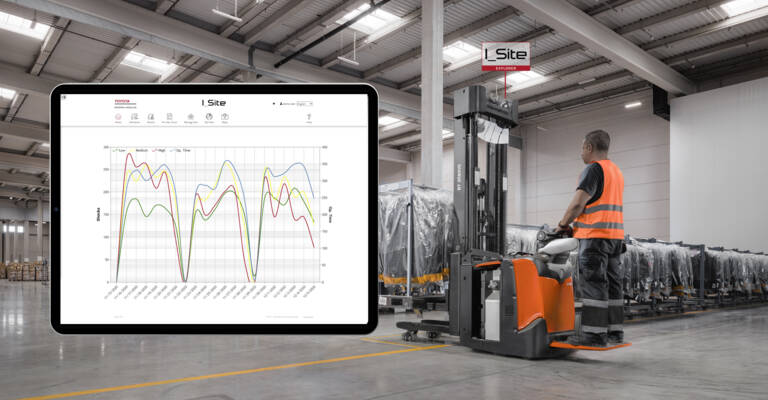
The My Toyota Material Handling customer platform and our I_Site fleet management system allow our customers to take greater control of their truck and fleet operations while supporting safer and more efficient use. Through features such as shock monitoring, battery management, predictive maintenance and repair planning, I_Site helps optimise truck performance throughout its life cycle. As demand for digital fleet management solutions continues to grow, these tools have become an integral part of our customer operations. By enabling preventive maintenance, improved usage patterns and timely interventions, I_Site actively contributes to extending truck lifespan and supports a more circular use of resources.
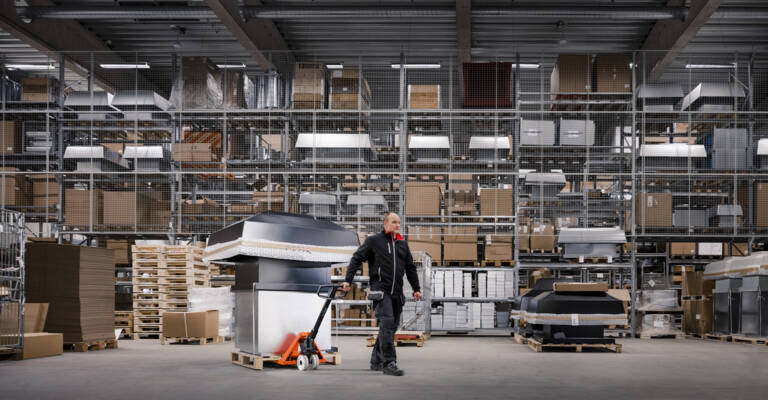
Innovation forms the core of our circular path: collaborative approach - from prototype to market-ready products
We can contribute to a more sustainable society by developing the safest and most energy-efficient logistics solutions possible. We do that by focusing on technology with the highest potential for positive change. To stay at the forefront, we need to monitor all developments that impact the world of logistics, which of course means making sustainability an integral part of our business approach. Here, partnerships are crucial, as no organisation can work towards a sustainable future alone. For example, working with SSAB, we have introduced recycled steel in our hand pallet and powered pallet trucks, reducing the carbon emissions for these products.
Quick links